Specialist motor selection
Slotless & Coreless Motors
Three specialist motor architectures, separated clearly by commutation method, dynamic performance and the control system required.
Choose by engineering priority
Which Motor Route Fits Your Application?
Start with the operating characteristic that matters most. Each route leads to a focused technical page with its own product range and configuration options.
01Smooth, quiet brushless motion
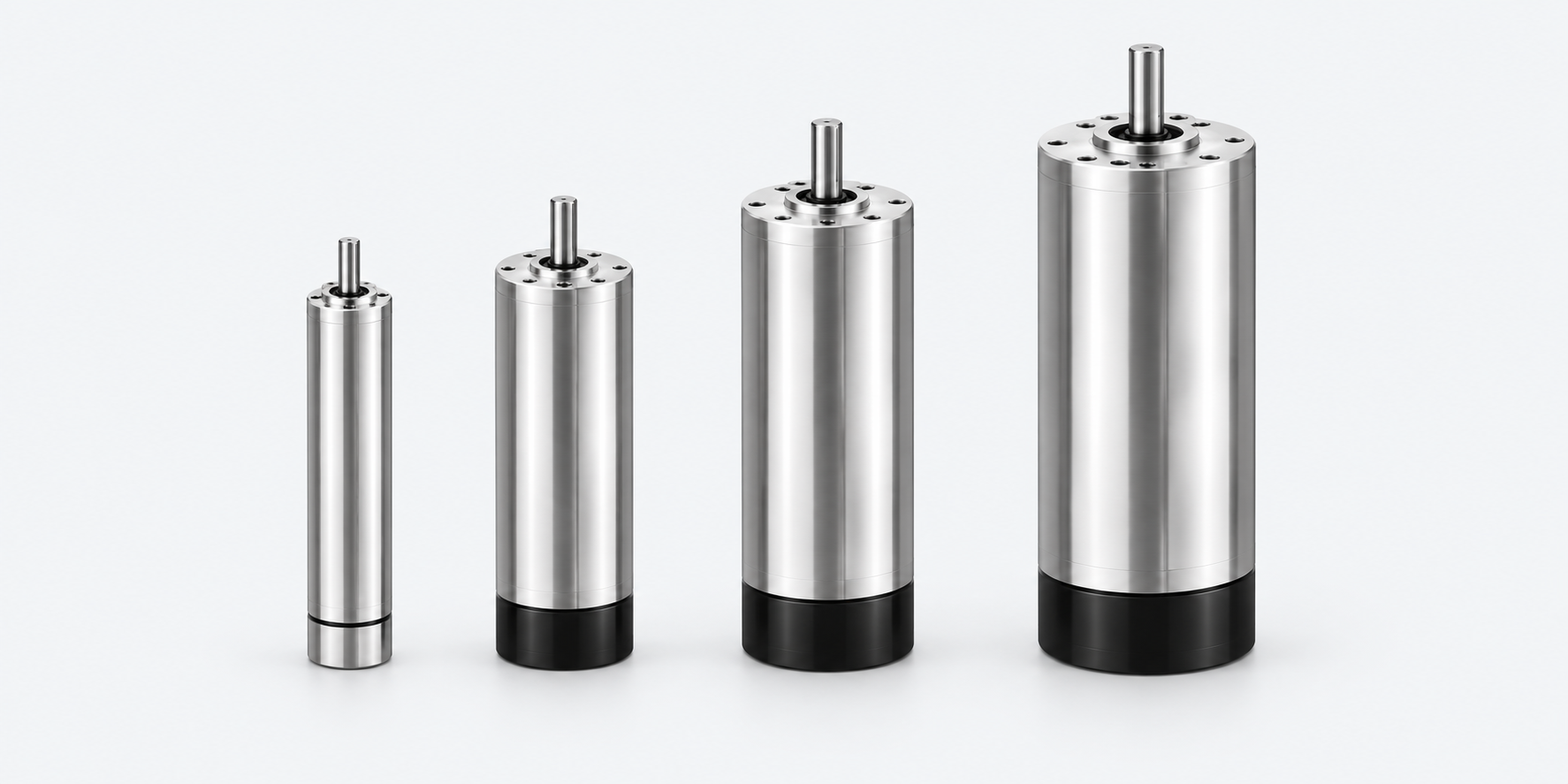
Slotless Brushless Motors & Drives
Electronically commutated, slot-free motor platforms for smooth torque, low acoustic noise and long-life precision motion.
- 16–87 mm diameter
- Low cogging and high-speed capability
- Matched controller, feedback and gearing
Explore More → 02Very low rotor inertia
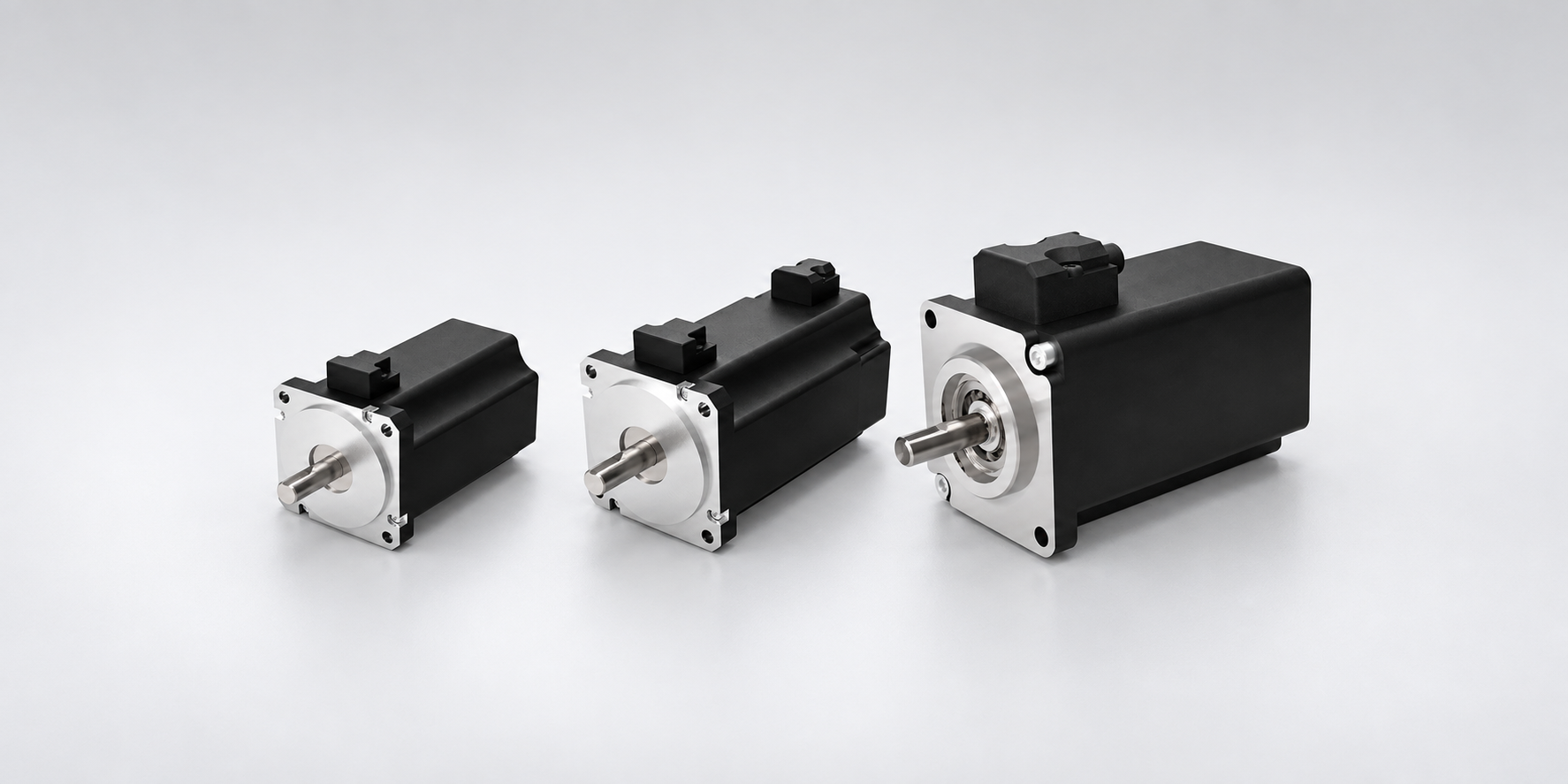
Coreless BLDC & Servo Motors
Coreless brushless construction combines rapid dynamic response with electronic commutation for demanding servo and continuous-duty applications.
- 16, 22, 26, 32, 45 and 80 mm
- No cogging and rapid acceleration
- Feedback, brake, gearbox and controller options
Explore More → 03Simple, responsive DC control
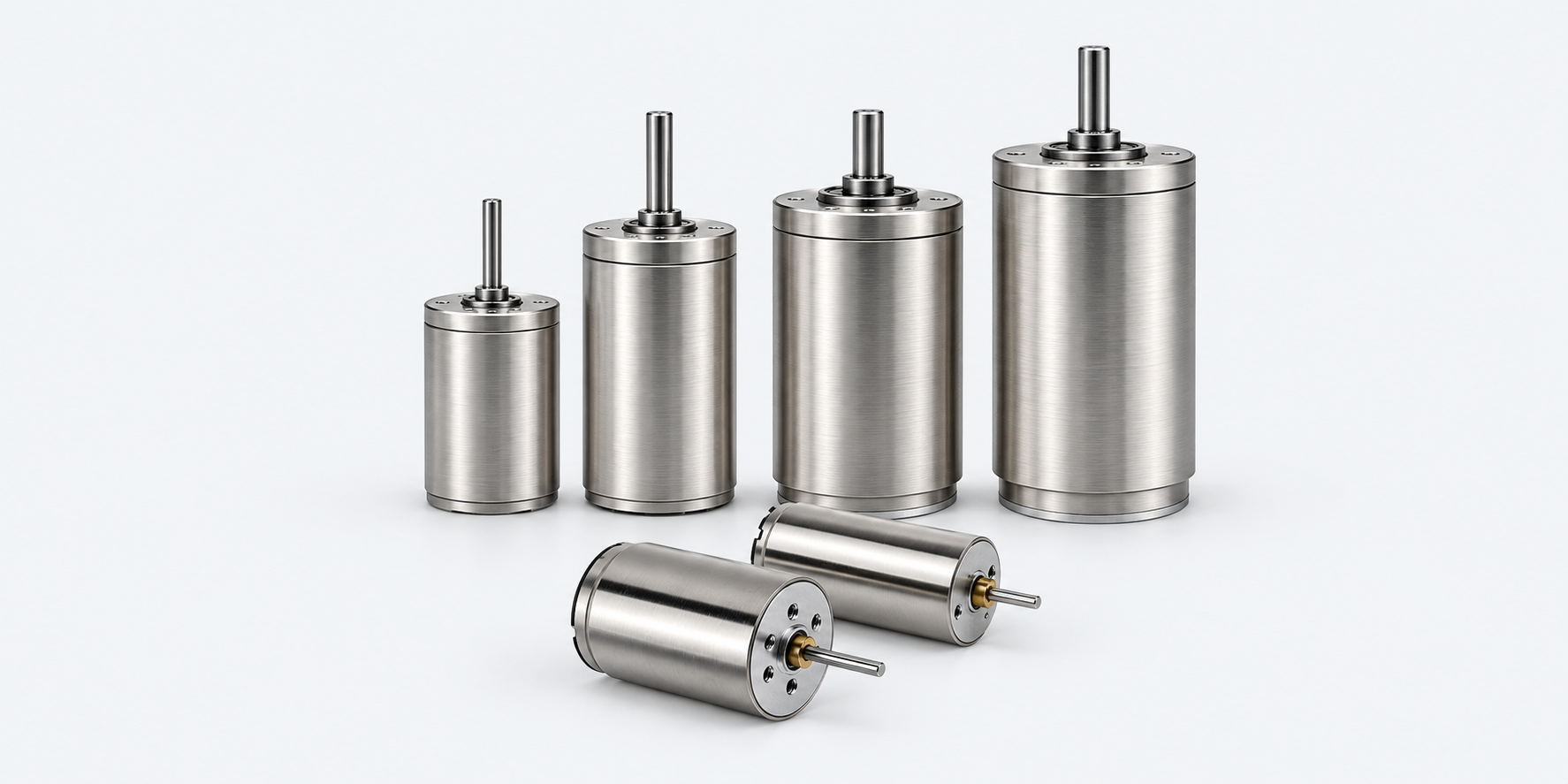
Graphite Brush Coreless Motors
Ironless armature motors with graphite-brush commutation for compact equipment requiring low inertia, linear output and straightforward DC control.
- 16, 22, 26 and 32 mm
- High acceleration and smooth rotation
- Compact, efficient and easy to control
Explore More → At-a-glance selection
Different Constructions, Clearer Choices
The three routes remain separate so visitors can identify the correct technology without working through a large combined product table.
01Slotless brushless
Strongest fitQuiet, low-cogging continuous motion
Control routeElectronic controller
02Coreless BLDC & servo
Strongest fitFastest response with long brushless life
Control routeElectronic controller and feedback as required
03Graphite brush coreless
Strongest fitCompact response with simple DC control
Control routeDC supply or PWM controller
Technical data presentation
Coreless Platform Summary
Standard frame platforms are configured around the required speed–torque operating point. Final rated values are confirmed against motor length, winding, thermal conditions and duty cycle.
16–32 mmMiniature platforms12 / 24 VDCNominal windings±10%Speed & torque toleranceMotor · Feedback · DriveMatched system options | Motor technology | Frame range | Voltage | Speed rating | Torque rating | Control route |
|---|
| Graphite brush coreless | 16 · 22 · 26 · 32 mm | 12 or 24 VDC | Application-matched | Application-matched | DC or PWM |
| Slotless brushless | 16–32 mm platforms | 12 or 24 VDC | Application-matched | Application-matched | Electronic commutation |
Rating basis: Published values are indicative selection data. Unless otherwise agreed, speed and torque may vary by ±10%. Continuous, peak, stall and no-load values remain separately identified in the final approved specification.
Internal technical benchmark
Verified Competitor Performance Envelopes
Published FAULHABER and Portescap data has been checked against motor volume and the relationship between speed, torque and mechanical power. These figures are reference envelopes for comparing equivalent SDT diameter, length, voltage, thermal mounting and duty.
0.75–2.03 W/cm³Graphite-brush reference3.5–5.5 W/cm³Standard slotless reference5.5–8.0 W/cm³High-performance slotless | Technology | Reference size | Published speed | Torque capability | Continuous output | Power density |
|---|
| Graphite brush | 26 × 42–68 mm | 7,000–10,000 rpm | 31.3–71.2 mNm | 22.5–73.4 W | 0.75–2.03 W/cm³ |
| Graphite brush | 32 × 42–72 mm | 6,000–7,000 rpm | 41.6–125 mNm | 25.3–77.8 W | 0.75–1.34 W/cm³ |
| Slotless BLDC | 16 × 36–52 mm | 40,000–73,000 rpm | 7.5–16.1 mNm | 27.5–66 W | 3.54–6.31 W/cm³ |
| Slotless BLDC | 22 × 35–60 mm | 38,000–60,000 rpm | 14.3–50.5 mNm | 56–180 W | 4.21–7.89 W/cm³ |
| Slotless BLDC | 30 × 64–90 mm* | 25,000–30,000 rpm | 137–225 mNm | 187–244 W | 3.84–4.13 W/cm³ |
Comparison ruleMaximum speed, maximum torque and maximum power are separate operating limits and must not be treated as simultaneous. An SDT platform is classed as equivalent only when its verified result is within ±10% under comparable conditions.
Established platforms · application-specific performance
Engineered to Match the Required Operating Duty
The 16, 22, 26 and 32 mm frame sizes are established miniature-motor platforms with well-understood operating envelopes. SDT uses these recognised industry products as engineering benchmarks, then configures the winding, magnetic circuit, commutation, bearings, thermal design, feedback and control around the customer's actual duty.
This enables graphite-brush coreless and slotless brushless solutions to target the required torque, speed, power density, efficiency, service life and control performance—without implying that frame diameter alone determines the final rating.
01Define
Application duty, envelope, voltage and control requirements agreed.
02Evaluate
The motor architecture and preliminary performance data are reviewed.
03Develop
Winding, interfaces, feedback and drive configuration are engineered.
04Verify
Samples and validation results are checked against the agreed duty.
05Supply
Final drawings and production specifications are approved for release.
Customer approval remains visible throughout. Requirements, preliminary data, drawings, samples, validation results and final production specifications are reviewed at defined stages before the product advances.
Application-led selection
Not Sure Which Route Fits?
Share the speed, torque, duty, envelope, life and control requirements and SDT will identify the suitable motor and drive architecture.